


When people think about quality in construction, they often picture the finished building.
The reality is that quality is determined long before students walk through the doors.
Across Central Texas, school districts are making some of the largest investments in educational infrastructure in their history. As communities grow and enrollment demands increase, owners are asking an important question: How do we ensure today’s facilities perform as intended for decades to come?
Currently under construction by Bartlett Cocke, the project includes academic spaces, career and technical education classrooms, administration and student services, and support facilities designed to accommodate future enrollment growth. The campus also features a 13,659-square-foot agricultural sciences barn supporting FFA and agricultural education programs, a football stadium and athletic facilities, along with campus-wide stormwater detention and water quality infrastructure.
While the scale of the project is impressive, the real story is how quality is being managed behind the scenes.
Moving Beyond Traditional Quality Control
Historically, quality control in construction relied heavily on manual inspections, paper documentation, and field observations. Those fundamentals still matter, but today’s projects demand greater visibility and accountability.
Modern technology allows project teams to identify issues earlier, improve coordination among trades, and create a more transparent construction process from start to finish.
On Georgetown High School #4, these digital tools are transforming quality from a reactive process into a proactive one.
Creating a Single Source of Truth
One of the biggest challenges on large projects is ensuring every stakeholder is working from the same information.
Bartlett Cocke uses Autodesk Build as a centralized platform for plans, specifications, requests for information, submittals, daily reports, and rolling deficiency tracking. Rather than relying on multiple document versions or disconnected communication channels, the platform provides a single source of truth for the entire project team.
The result is improved accountability, faster decision-making, and greater confidence that work is being performed according to the latest requirements.
Building the Project Virtually First
Quality issues often begin with coordination challenges.
Building Information Modeling (BIM) allows Bartlett Cocke and its trade partners to construct the facility virtually before construction begins in the field. Mechanical, electrical, plumbing, fire protection, structural, and architectural systems can be coordinated in a digital environment, helping identify clashes before they become costly field conflicts.
Resolving issues during design and coordination is significantly more efficient than addressing them after installation. BIM reduces rework, minimizes material waste, and creates a smoother construction process for everyone involved.
Seeing Below the Surface
Technology is also changing how site work is verified.
Using DroneDeploy, project teams create highly accurate drone maps that incorporate ground control points and 3D utility overlays. The resulting interactive site model provides a detailed view of existing conditions and underground infrastructure before excavation begins.
This level of visibility improves planning, enhances situational awareness, and reduces the risk of utility conflicts that can affect schedule, budget, and overall project quality.
Finding Issues Before They Disappear
Perhaps one of the most impactful advancements in quality management is the ability to verify work before it becomes concealed.
Using SiteAware, Bartlett Cocke performs detailed scans of the building envelope before wall systems and finishes are installed. These scans allow the team to compare actual installation conditions against design requirements and identify deficiencies while corrective action remains straightforward.
Instead of discovering issues months later, teams can address them immediately, improving quality while reducing costly rework.
Building Better Schools Through Better Quality
Schools are among the most important facilities a community builds. They serve generations of students, educators, families, and residents.
As educational projects continue to grow in size and complexity, quality can no longer be viewed as a final inspection activity. It must be integrated into every phase of planning, coordination, and construction.
Technology will never replace experienced builders, trade partners, and project teams. What it does provide is better information, greater transparency, and more opportunities to identify issues before they become problems.
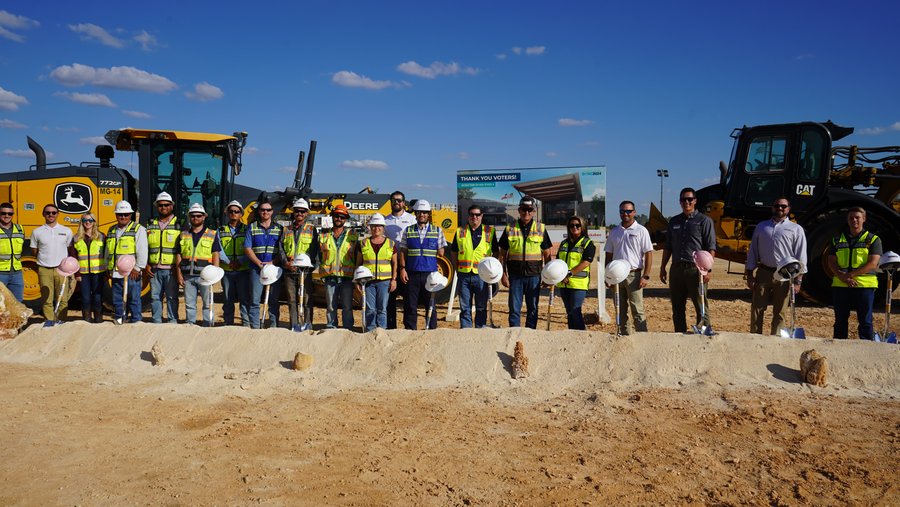
For Bartlett Cocke, Georgetown High School #4 represents more than another school project. Scheduled to open in 2028, the campus reflects a commitment to delivering durable, high-performing learning environments that will serve Georgetown ISD and the surrounding community for decades to come.
That’s what quality looks like today: building it right long before the ribbon is cut.
For more information about Bartlett Cocke please visit our website at www.bartlettcocke.com.
